
Fullerton City Directory Holdings
Fullerton city directory research starts with the collection that can actually be reached, not with an assumed complete run. The Fullerton Public Library confirms a local city-directory collection, but its public page does not post an exhaustive shelf list or exact publisher sequence. NARA supplies firm anchor points for Orange County volumes that include Fullerton. A North Orange County microfilm guide adds an older regional trail, although its gaps must be checked at the library. The coverage table separates verified years from finding aids so a family researcher can plan a visit without turning an unconfirmed year into a fact.
| Collection | Years | Where Held | Access |
|---|---|---|---|
| Fullerton city directories | Exact run not posted | FPL Local History Room | Onsite, Ask an Archivist, some digital material |
| Orange County volumes including Fullerton | 1926, 1929, 1931 | NARA city-directory holdings | Verify reel access with NARA |
| North Orange County directory guide | 1903-1928; 1904-1909 gaps | Gale microfilm finding aid, verify at FPL | Finding aid only |
| Sanborn map companions | 1890, 1894, 1900, 1907, 1911, 1917, 1927; later into the 1940s; 1959 digital item | FPL, Development Services, digital mapping | Access and reproduction limits vary |
| Historic newspapers and yearbooks | Collection-specific | Headline History, FPL, school and campus archives | Digital and onsite options vary |
The North Orange County guide names Anaheim, Atwood, Cypress, Fullerton, Placentia, Brea, La Habra, Buena Park, Stanton, Los Alamitos, Yorba Linda, and Richfield in a regional series. It is useful for locating a reel or neighboring place, but not proof that every Fullerton year survives. Missing volumes, changed publishers, and a directory that covers more than one city can all make a name appear to vanish.
Fullerton Directory Room
The first local stop is the Fullerton Public Library Local History Room at 353 W. Commonwealth Ave. The direct phone is (714) 738-6342, and the Ask an Archivist form is the right way to request an exact shelf check before travel. Posted hours are Tuesday 11-1 and 3-5, Wednesday 11-1 and 4-7, Thursday 11-1 and 3-5, and Friday 11-1. The room is closed Saturday through Monday. Those narrow windows make a short message useful, especially when the question concerns a particular year, publisher, reverse section, or neighboring Orange County town.
The Fullerton Public Library Local History Room collection page ties historical volumes to digital photos, newspapers, maps, yearbooks, birth and death material, and building files. A library staff member can point to the alphabetical resident section, the street or householder section, and related local files. The search path may be digital, onsite, or a blend of both, depending on the volume.
The Local History Room has preserved Fullerton community history for more than fifty years. It is also the best fallback when a county portal is recent, vendor-gated, or keyed to an identifier that does not match an old address.
The Fullerton Local History Room page gives a clear view of the local research doorway.
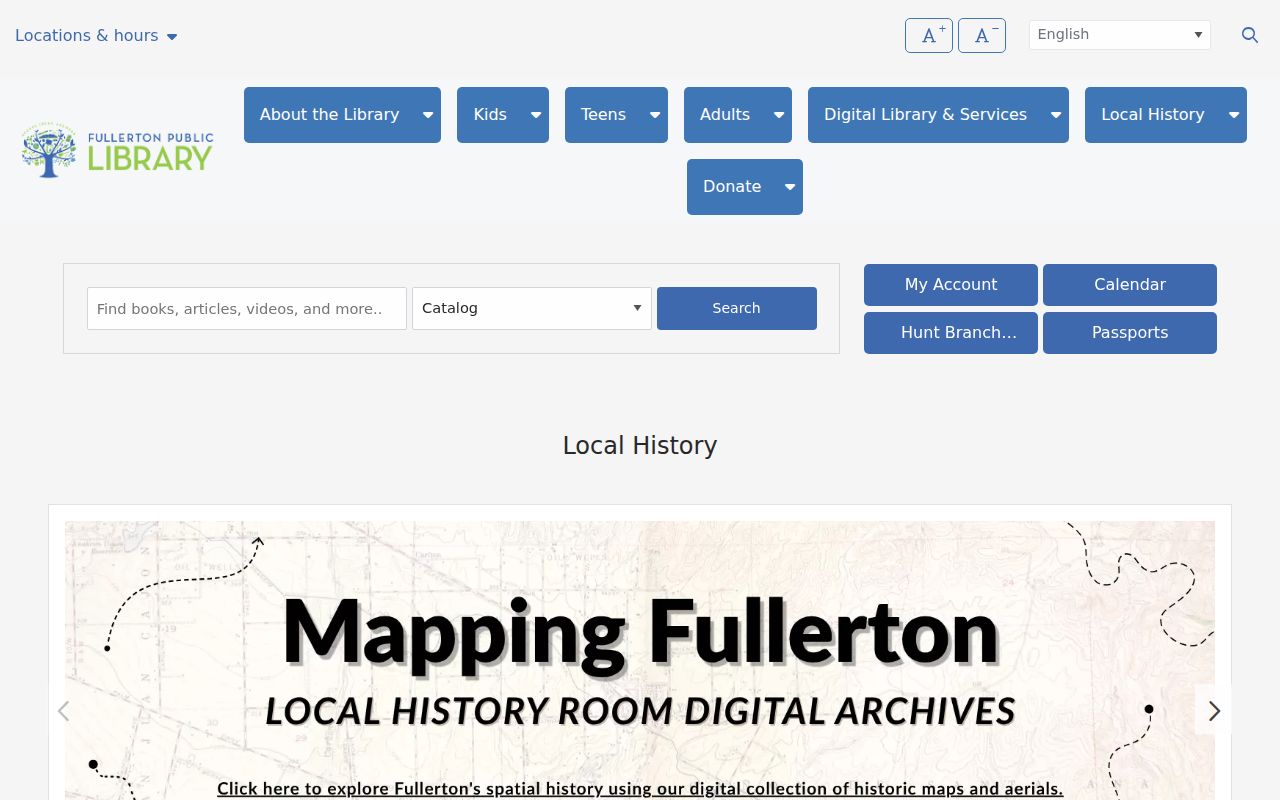
That library context matters because a directory volume is only one part of a family or home file. Ask for the related newspaper citation, map sheet, yearbook, or building story while the address and spelling are in view.
NARA Fullerton Directory Years
The National Archives verifies Orange County city directories that include Fullerton for 1926, 1929, and 1931. These three years are strong historical anchors because they identify an actual federal holding rather than a broad search result. They can bracket a household, business, or street name, but they do not establish a full annual run. A publication date also reflects a compilation made before printing, so an entry is evidence for a period, not a precise move-in date.
The NARA city-directory holdings page is the source for those verified years. Reel availability, viewing arrangements, and reproduction options should be confirmed before relying on a trip. The North Orange County guide reaches from 1903 through 1928 and reports gaps from 1904 through 1909, but the guide is not a government repository. That difference belongs in any citation note.
The federal catalog of city-directory holdings supplies a useful set of fixed points for a Fullerton directory search.
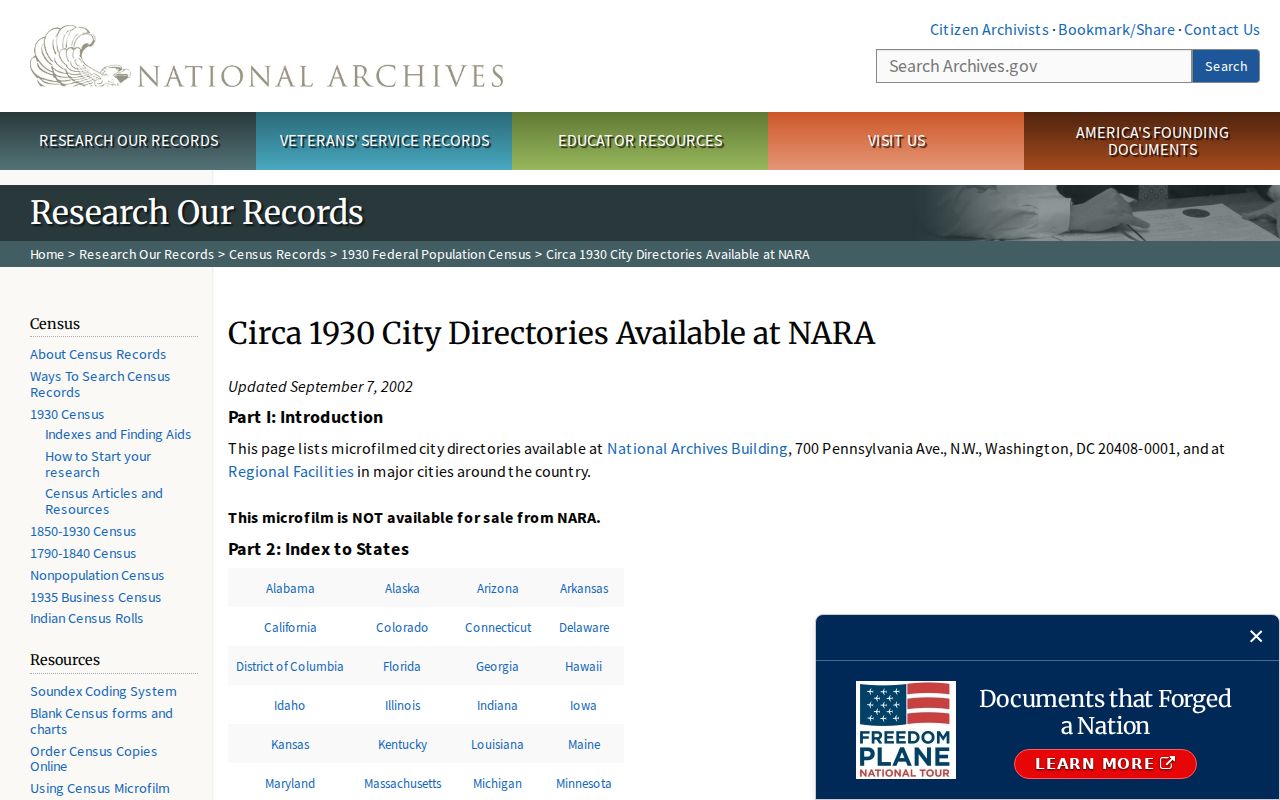
Compare a NARA year with the library shelf rather than treating one source as a substitute for the other. A name in 1929, absent in 1931, may reflect a move, a changed spelling, an omitted household, or a volume difference.
Fullerton Directory Gaps to Verify
Exact Fullerton shelf years and publisher names are not posted by the public library page. That is a real research gap, not permission to fill the blank with a guessed Polk or phone-book run. Ask an Archivist for the call number, publication title, years held, nearby-city coverage, and whether the street or criss-cross pages are bound with the alphabetical pages. Record the reply with the date of the request. This small habit keeps a family history source list honest.
The Gale guide is another lead with a built-in warning. It describes a regional North Orange County series for 1903-1928, yet reports no 1904-1909 volumes. Verify the reel and year at FPL. FamilySearch can be searched by Orange County record type, including deeds, probate, marriage, and naturalization, and locked images may require a FamilySearch center or affiliate. User-contributed trees remain leads, not proof.
Collection check. A verified year is not the same as a verified continuous run. Ask for the exact Fullerton shelf list and the directory's abbreviation key before drawing a long conclusion.
Newspapers can fill a gap without pretending to be a directory. Headline History and individual landmark pages cite the Fullerton News and Fullerton News Tribune by date. An exact issue date paired with a surname, street, or building name often works better than a broad OCR search.
If a municipal directory or related city record is not posted, the Fullerton City Clerk public-records channel is the CPRA fallback. Government Code division 10 §§7920.000-7931.000 governs the California Public Records Act, and §7922.535 normally gives the agency ten days to determine whether responsive records are disclosable.
Reading Fullerton Directory Entries
Typical Orange County and Polk-style entries compress a household into a few marks. A surname may be followed by a given name or initial, with a spouse in parentheses. The line may give an occupation or business, then use “h” for home or “r” for resides before the street number and name. A widow notation can name the deceased spouse. Business listings may place the proprietor at a business address rather than a home address.
| Name | Indexed adult or household head; initials are common, and a spouse may appear in parentheses. |
|---|---|
| Occupation | Historical work or business detail, sometimes with an employer or firm name. |
| Spouse | Parenthetical spouse notation varies by volume and may be absent. |
| Address | Street number and name, often preceded by “h” or “r” for home or residence. |
| Owner or renter mark | Some volumes identify an owner or renter; treat the mark as a historical entry field. |
| Widow notation | “wid” may identify a widow or widower and name the deceased spouse. |
These fields show what the compiler chose to print. They do not establish a legal residence, a complete household, or ownership of the parcel. Check one year before and after, compare the address with a census or permit, and use the deed record when the question is title. For a present-day identity question, a directory find can be a lead for the Fullerton resident lookup, not the final answer.
Fullerton Directory Terms Decoded
Old directory pages are easier to read after the volume's key is found. The key may explain short marks, trade labels, initials, and the symbols used for a home, a business, or a person listed in a street section. Photograph or transcribe that key first when access rules allow it.
- Criss-cross directory
- A street-order section arranged by street and number, then occupant or telephone, rather than by surname.
- Householder index
- An index that points from a household head or listed adult to a residence, often useful when the street is known but the surname spelling is not.
- Abbreviation key
- The volume's legend for short forms such as “h,” “r,” and “wid,” plus trade or address symbols.
The alphabetical section answers “who was listed under this name?” The householder or criss-cross section answers “who was listed at this number?” Both can miss children, lodgers, people who declined a listing, and households outside the publisher's coverage area. A blank is therefore a prompt to test the next volume, not a finding that nobody lived there.
Fullerton Directory Companion Sources
Maps make a directory address legible across time. Fullerton Heritage's house-research method joins directories with deeds, permits, Sanborn sheets, and oral history. The original-townsite Sanborn years verified in the local guide are 1890, 1894, 1900, 1907, 1911, 1917, and 1927. Later maps into the 1940s were reported at Development Services, while the digital map collection lists a 1959 Sanborn item. The old library sheets may have reproduction limits.
The Fullerton historical mapping collection places aerials, street systems, and map context beside the directory trail.
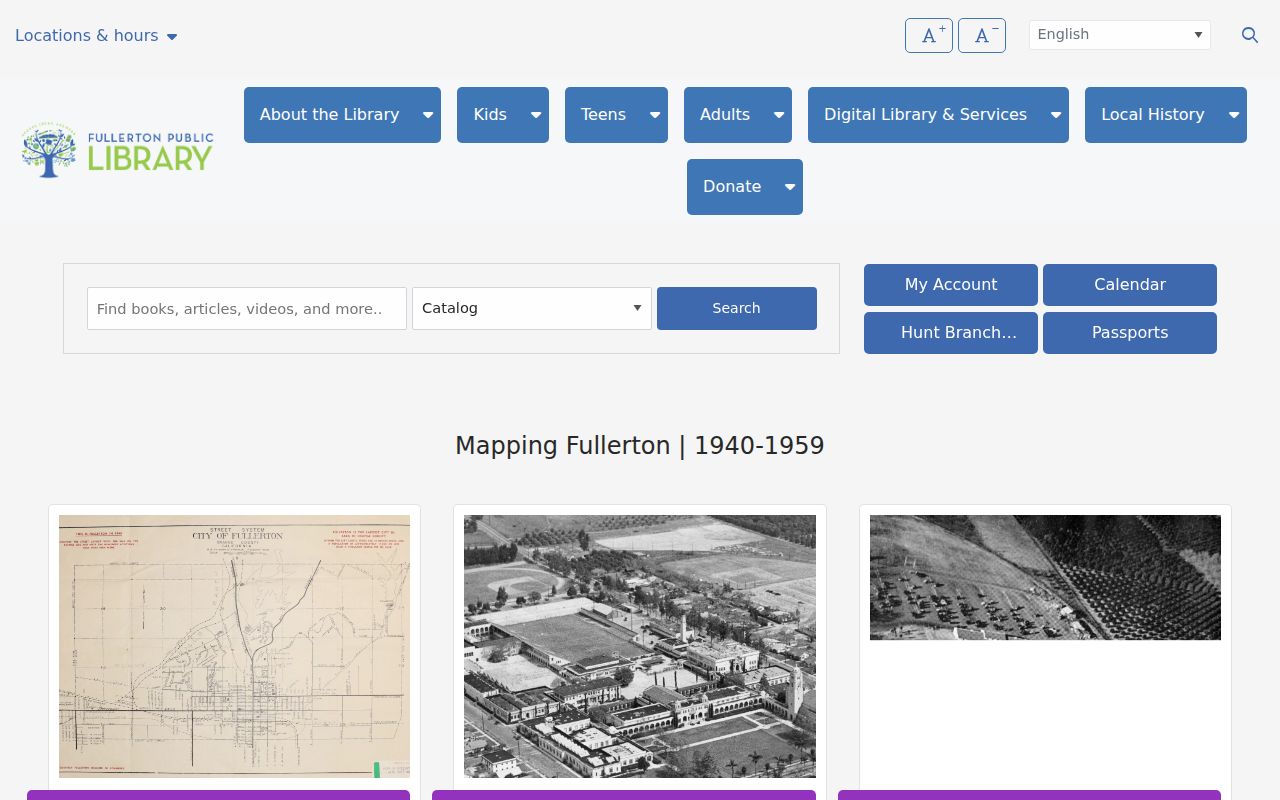
Map years can bracket when a road, subdivision, or institution appeared. They also help resolve an old street name before an entry is compared with a current parcel.
Cal State Fullerton's Pollak Library, Special Collections, and University Archives add campus publications, newspapers, oral histories, and regional collections. The Online Archive of California CSUF collections helps identify the collection description before a box request. Fullerton College and Fullerton Joint Union High School yearbooks can distinguish classmates with common names.
Campus and school sources add an affiliation or class year, while the directory supplies a dated address clue. The two forms of evidence answer different questions.
Fullerton Directory Meets Archives
Fullerton's 2025 landmark initiative gives historical directory research a timely local bridge. The library launched a 24/7 Digital Archive of Local Historical Landmarks, and a City Council Preservation Week proclamation documented the launch and the Local History Room's more than fifty years of stewardship. Individual pages join photographs, documents, building histories, Sanborn references, and dated newspaper citations. A directory entry can supply the name or street that unlocks one of those address dossiers.
The Fullerton digital archive proclamation records why the project matters for local history.
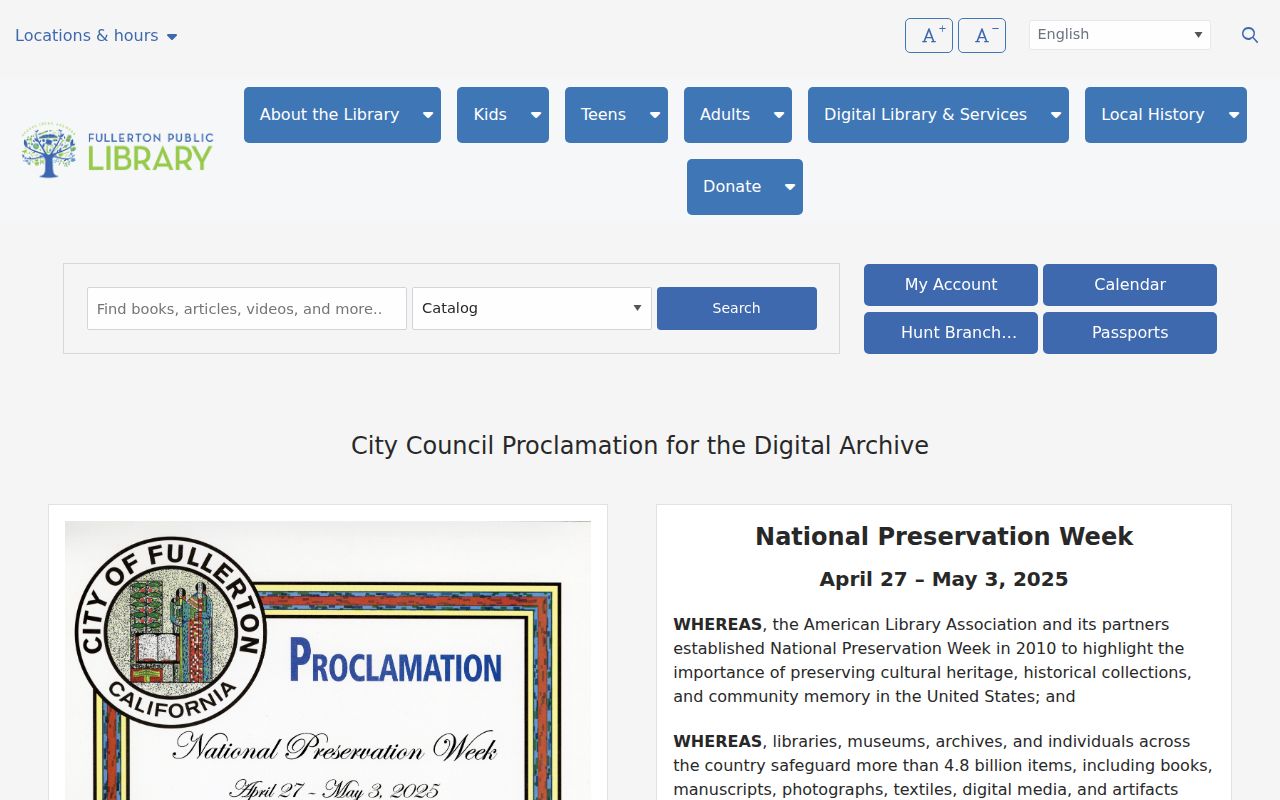
Round-the-clock access is helpful for a first pass, but the dated citation still needs to be read as a source trail. Open the cited newspaper issue or ask the library for the underlying file when a claim matters.
The library's landmark collection also shows how one address can carry a resident, builder, business, and neighborhood story without becoming a roster. The Fullerton landmark files are most useful when searched with an exact street name and a directory year.
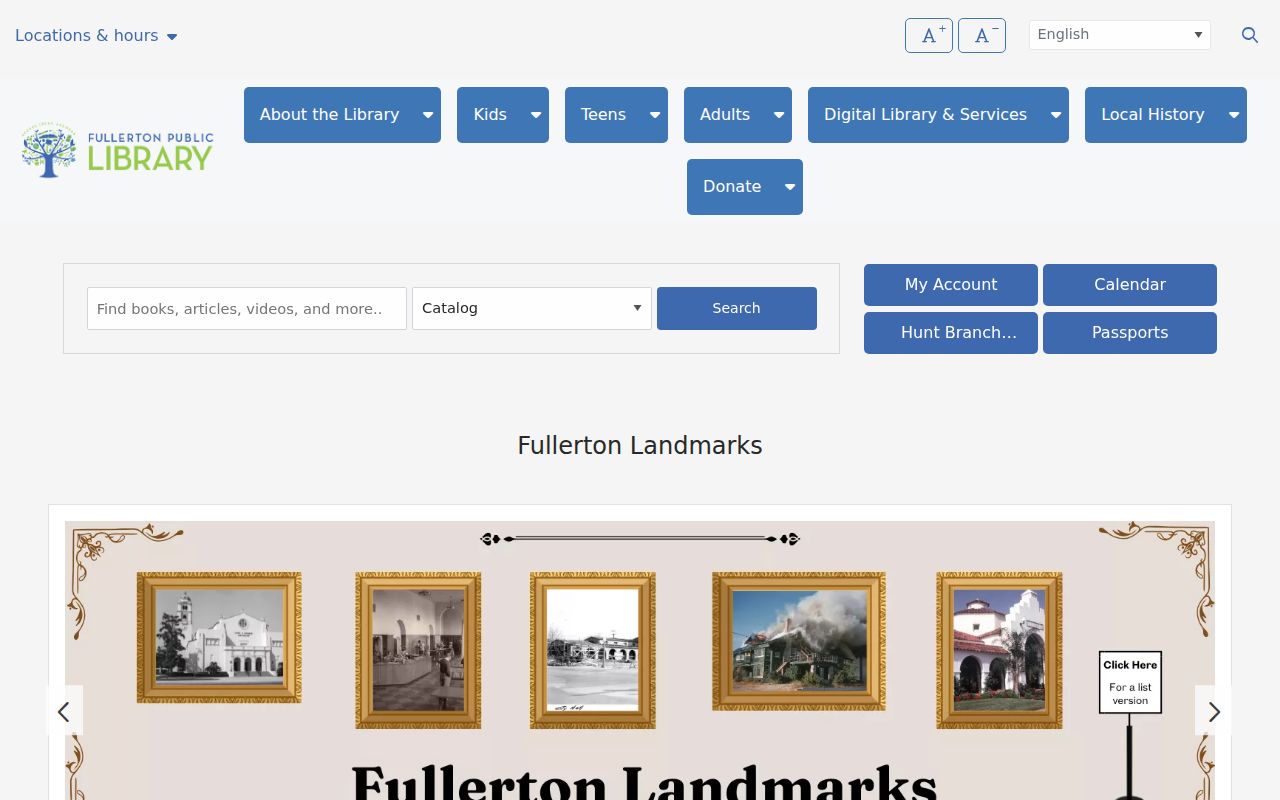
That archive bridge keeps the historical directory tied to a real place and a traceable citation.
Fullerton Directory and Census Pairings
Federal population censuses are public through 1950 under the 72-year rule. Pair the nearest directory with the 1900, 1910, 1920, 1930, 1940, or 1950 census to compare household members, relationships, ages, birthplaces, and tenure. The directory can fill the years between census dates, while the census can test whether a spouse or child was present when the directory line is brief. The 1960 census is scheduled for public release in 2032, so it cannot yet serve as a public counterpart for a mid-century directory.
There is no general California state census substitute for those federal decades. FamilySearch catalog entries can point to deeds, probate, marriage, and naturalization records, but locked images may require an affiliate center. User trees are clues only. For a name that appears in a Fullerton city directory, preserve the volume year, page, section, and exact spelling before moving to a different record group.
Pairing rule. A directory's first or last appearance brackets a change. It does not give an exact move date, death date, or ownership date without a second source.
Tracing Fullerton Directory Households
A careful household trace begins with a normalized address or a distinctive name. Note the street spelling, number, spouse, occupation, and any owner or renter mark. Then move through adjacent directory years and pair each interval with the closest public census. If the goal shifts from a historic entry to one modern person, the Fullerton resident lookup supplies the separate court, property, vital, and business checks. If the goal stays with a block, use the Fullerton street directory for the current address path.
- Normalize the address in current GIS, then use historic maps to test an old street name or number.
- Read the alphabetical entry and the street or householder section for the same directory year.
- Check the next available volume, noting first and last appearances without treating either as an exact move date.
- Pair the directory evidence with the nearest 1900, 1910, 1920, 1930, 1940, or 1950 census.
- Use permits and Sanborn maps to separate a new building from a new occupant, then use deeds for ownership.
- Continue through obituaries, probate, yearbooks, newspaper announcements, and cemetery sources when the family trail calls for it.
The resulting record is a dated chain of clues. A household may be absent because the publisher omitted it, the spelling changed, the family moved, the volume skipped a year, or the address fell outside the run. Record each explanation beside the source instead of smoothing the gaps away.
The working timeline is short but useful:
- 1887 - The Amerige brothers' Fullerton townsite begins the early local grid.
- 1889 - Orange County is created from Los Angeles County, changing later record custody.
- 1904 - Fullerton incorporates as a city.
- 1903-1928 - The regional guide describes a North Orange County directory span, with 1904-1909 gaps.
- 1926, 1929, 1931 - NARA verifies Orange County volumes that include Fullerton.
- 2032 - The 1960 federal census is scheduled for public release.
The timeline gives a frame, not a substitute for the shelf check. A Fullerton directory is most reliable when its page, year, section, and companion record are kept together.